Psychosocial Hazards & Safety Australia
Psychosocial Hazards & Safety Australia
What We Provide
We deliver specialist education and risk intelligence on psychosocial hazards with direct physiological and mental health implications, including fatigue-related injury risk, cognitive overload, emotional dysregulation, sleep disruption, and stress-related physiological change.
Education addresses layered physiological and neurological factors that alter fatigue tolerance, recovery capacity, and stress response, where these factors affect psychosocial hazard recognition, risk attribution, and systemic misclassification within existing frameworks.
ISO 45003 Alignment
Alignment with Psychosocial Risk Standards
Our education aligns with recognised psychosocial risk domains referenced in ISO 45003, including workload, role demand, fatigue, recovery, trauma exposure, and cognitive load.
These domains are addressed in the context of risk recognition and interpretation, highlighting how psychosocial hazards may contribute to mental health impacts (such as anxiety, burnout, and reduced cognitive capacity) and physical health consequences (including injury risk, chronic fatigue, and stress-related illness) when physiological load is not adequately considered within existing systems.
Biological and Neurological Variability
We provide education on biological and neurological variability, including neurodivergence and gender-affirming hormone use, where these factors influence mental health risk, physiological stress response, fatigue, and sensory processing within work and training systems.This education
supports accurate psychosocial hazard recognition and risk attribution, reducing the systemic misclassification of health-related effects as behavioural or performance issues within existing frameworks.
Fitness and Training Sectors
Within fitness, training, and health-adjacent sectors, we address information risksthat contribute to physical injury and mental health strain. These include misinterpretation of physiological indicators, unrealistic load expectations, and inappropriate responses to fatigue, recovery limitation, or hormonal change.
Our role is limited to education and risk interpretation, supporting improved hazard recognition and health-protective judgement within training and professional decision-making contexts, rather than programme design or clinical intervention.
Distinct Health-Centred Risk Intelligence
Our approach draws on continuous professional practice across multiple high-risk and regulated environments, including sports medicine-informed training, health, disability, aquatic, equine, corporate, and government settings.
This cross-sector exposure enables the identification of psychosocial hazards with both mental and physical health implications, particularly where human variability is not adequately recognised within standard training, governance, or assurance systems, creating latent safety and wellbeing risk.
Risk, Human Factors & Psychosocial Safety Systems
Exposing foreseeable psychosocial risk missed by conventional WHS systems
We assist insurers, certification bodies, and high-consequence operators to identify and interpret foreseeable psychosocial hazards, including fatigue, stress, physiological load, panic response, hormonal variability, and neurodivergent processing, where these risks are not adequately recognised within conventional WHS and assurance systems.
This support is provided through evidence-ready documentation and structured risk intelligence, designed to inform governance, assurance, and decision-making processes rather than replace audit, assessment, or control functions.

Sector Specific Psychosocial Hazarad Coverage





Case Study Highlight:
Psychosocial Hazard Failure in National Agriculture & Logistics
Case study notice
De-identified account shared for public interest and educational purposes. This is not an audit, investigation, or compliance review..
When Psychosocial Hazards Go Unidentified in High-Risk Operations
National Agricultural & Logistics Supply Operation
A near-fatal loading dock incident exposed how production pressure, suppressed reporting, and authority-driven urgency can undermine psychosocial safety duties in high-risk operations.
This de-identified case study is based on information voluntarily provided after employment ended.
Full Case Study
Overview
This de-identified case history is based on information voluntarily provided after employment ended by a worker from a large Australian agricultural supply operation.
The organisation was not a client.
No audit, investigation, or compliance review was conducted by us.
This case is presented to illustrate how psychosocial hazard duties under Australian work health and safety law can be structurally undermined in high-risk operational environments.
Operational Context
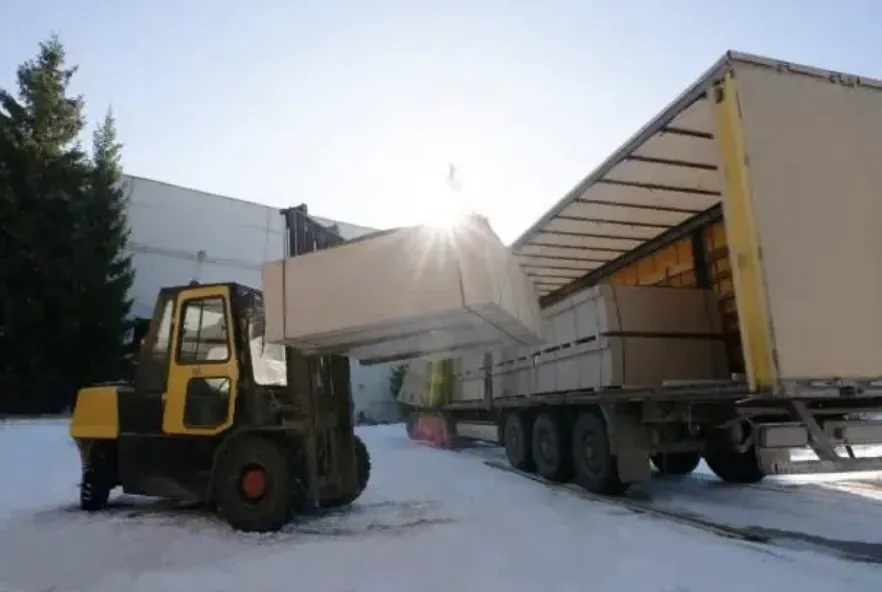
The operation involved daily loading dock activity supporting national fresh food distribution.
Work included forklift loading, trailer dispatch coordination, and time-critical transport scheduling.
Production pressure and dispatch urgency were embedded features of the work environment.
Critical Near-Fatal Incident
A serious incident occurred during routine dispatch:
• A worker was inside a semi-trailer fitting load restraint bars
• A forklift was also inside the trailer
• A supervisor signalled the truck driver to pull away
• The vehicle began moving while workers were still inside
The worker narrowly avoided being crushed or dragged beneath the vehicle.
No effective corrective controls or systemic changes were implemented following the incident.
Pattern of Earlier Incidents
According to the account, this was not isolated.
Earlier serious events included:
• A worker falling from a truck during repositioning
• A driver sustaining broken ribs after falling from a loading dock
• Delayed emergency response following injury
These events were treated operationally rather than as indicators of systemic safety failure.
Systemic Risk Factors Identified
Routine practices reportedly included:
• Loading unattached trailers
• Verbal dispatch signals replacing physical exclusion controls
• Supervisory urgency overriding safe sequencing
• Time pressure normalised as operational necessity
These practices exposed workers to foreseeable risk of serious injury or death.
Psychosocial Hazards Present
The account described conditions consistent with psychosocial hazards recognised under Australian WHS regulations:
• Fear of reprisal or job loss
• Suppressed incident and near-miss reporting
• Authority-driven urgency
• Excessive workload pressure
• Fatigue from extended shifts
• Limited psychological safety during consultation
These factors were systemic rather than individual.
Impact on Decision Making
Workers reportedly recognised unsafe conditions but often chose not to intervene due to:
• Fear of employment consequences
• Previous negative responses to raising concerns
• Expectation that safety issues would be dismissed
This represents a predictable risk pattern in which psychosocial pressure suppresses safe behaviour.
Neurodiversity and Foreseeable Vulnerability
One worker involved was described as being on the autism spectrum.
The account indicated:
• Reliance on clear, consistent communication
• Increased risk under rushed or ambiguous instruction
• Dismissal of raised concerns
• No structured adjustment to communication or task design
Under Australian WHS and discrimination law, failure to consider known or reasonably foreseeable vulnerability increases both risk and liability.
Interaction Between Psychosocial and Physical Risk
In this case, psychosocial hazards amplified physical danger.
Production pressure and authority-driven urgency distorted judgement in safety-critical tasks.
Planned audits reportedly failed to capture real conditions due to constrained worker consultation.
Australian regulator guidance recognises this interaction as increasing the likelihood of serious injury or fatality.
Legal Framework Engaged
This case engages duties under Australian work health and safety legislation, including:
• Identification of psychosocial hazards arising from work design and management
• Genuine consultation free from fear of reprisal
• Risk control using the hierarchy of controls
• Consideration of individual vulnerability where reasonably foreseeable
• Management of fatigue and stress in safety-critical work
These duties are reflected in the Model WHS Regulations and Safe Work Australia’s Code of Practice: Managing Psychosocial Hazards at Work (2022).
Why This Case Matters
Conditions described in this case are not unique.
They commonly arise in:
• Agriculture
• Logistics
• Transport
• Warehousing
• Construction
Particularly where production pressure, labour insecurity, and male-dominated operational environments intersect.
Our Role
Our work focuses on identifying psychosocial hazard gaps that are not being captured by existing audit, assurance, or reporting systems.
We do not conduct incident investigations or compliance audits.
We support organisations, regulators, insurers, and advisors to:
• Identify where duties are being structurally undermined
• Understand why workers may not speak during audits
• Clarify how authority pressure distorts safety decisions
• Strengthen lawful consultation processes
Case Study Notice
This case history is de-identified and shared for public interest and educational purposes.
It does not represent findings or services delivered to the organisation described.
Our Scope and Boundaries
Psychosocial Hazards & Safety Australia operates as an independent education and risk-intelligence advisory organisation.
All content is provided for educational and contextual purposes. Proprietary analytical methods, prioritisation logic, decision frameworks, and internal tools are not disclosed.
Our work focuses on the identification and interpretation of psychosocial and physiological hazard gaps within existing training, governance, and assurance systems. We support upstream risk awareness and informed strategic decision-making for organisations, standards bodies, insurers, and assurance professionals.
We do not conduct audits, compliance assessments, investigations, incident reviews, certification activities, or regulatory determinations. We do not provide clinical advice, mental health treatment, or workplace control implementation.
Our role sits at the hazard recognition and systems interpretation layer within regulated and high-risk environments.
What does Psychosocial Hazards & Safety Australia do?
We identify psychosocial hazard gaps that are being missed in current training, policy, and assurance systems, particularly where long-term stress exposure, human physiology, and system design intersect. Our work focuses on upstream risk awareness, identifying hazards before incidents, claims, or long-term harm occur.
How is your work different from wellbeing or EAP programmes?
Most well-being and EAP models are reactive and respond after distress or symptoms are already present. Our focus is on hazard recognition rather than symptom management. We examine how work systems, roles, environments, and cumulative biological exposure create predictable human risk over time.
Do you provide audits, investigations, or compliance sign-offs?
No. Psychosocial Hazards & Safety Australia is an education and risk-intelligence organisation. We do not conduct audits, private investigations, or formal compliance certifications. Our role is to support informed decision-making by strengthening the understanding of psychosocial risk, not to replace regulators, auditors, or clinicians.
Who is your education designed for?
Our work supports those responsible for risk, safety, training, and governance across complex and high-risk environments. This includes safety professionals, aged care and disability support services, junior doctors and medical trainees (including NHS contexts), justice and correctional services, the fitness industry, maritime and commercial diving, sport and recreation, educators, insurers, and leaders in safety-critical operations.
Our frameworks are designed for those who need to recognise psychosocial risk at the biological and physiological level, rather than only responding after harm has occurred.
Why do you include physiology and hormonal factors?
Human risk does not operate in silos. Physiological load, including hormonal variability, affects stress tolerance, recovery, cognition, and decision-making. Ignoring these biological factors creates significant gaps in traditional psychosocial risk identification. Including them allows for a more accurate understanding of human safety and exposure.
Is your work inclusive of transgender, non-binary, and gender-diverse people?
Yes. Our approach is based on human variability and exposure, not assumptions about identity. Where physiology or lived experience affects risk or recovery, it must be recognised to ensure safety models are accurate, complete, and inclusive.
Do you offer bespoke education for organisations?
Yes, where there is a clear commitment to governance and risk maturity. Bespoke education focuses on sector-specific exposure patterns and addresses gaps in existing training and policy, supporting alignment with contemporary psychosocial hazard duties.
Do you share your frameworks or methodologies publicly?
We share clear, high-level information about the scope of our work and the types of gaps we address. Our detailed frameworks and analytical approaches are delivered within authorised education and advisory settings, where they can be applied responsibly and with appropriate context.